
|
John Rook 1966 | |||||
| |||||



















 Southern California beach conditions








.gif)
















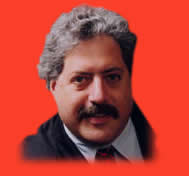





















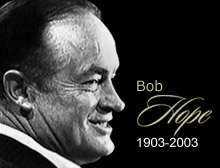
His face was among the worlds best known. In his century of life, Bob Hope would brush against millions, including me.
I was in Dallas recording jingles for WLS on my birthday. Having spent a long day in the studio, it was approaching midnight before I returned to my hotel hoping for a late room service snack and a few winks before catching an early morning flight returning to Chicago.
Rushing through an almost empty lobby, I entered an elevator where one other passenger was glancing at a newspaper. It was Bob Hope. �Look�s like we�re both cashin� in�, he said. Explaining my long day and how much I hoped room service would be open, �not the way I had hoped to spend my 30th birthday�, I said.
Suggesting the bar on the top floor might have a sandwich, �it�s my treat� he said wishing me a happy birthday. �Well thank you Mr. Hope�, I replied as we departed the elevator walking into a bar with a lonely barkeep. It was only the special consideration given Bob Hope that got me a turkey sandwich and a tall glass of iced tea for each of us. He joked how �reckless� it was taking in liquid at bedtime. �You�ll get there someday too young man�, he said rolling his eyes.
In not much more than 20 minutes we talked about us both being �Buckeyes� and about WLS where he noted George Gobel got his start.
We both yawned in unison. �Mr. Hope�, I said, �I really must thank you, but I have an early morning flight�.
�Me too� he said as he reached out to shake my hand, �but next time call me Bob�.
Thanks for the memory... Bob
= = = = = = = = = = = = =
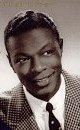
Nat King Cole
In mid-1964 I was excited when I learned my long time favorite, Nat King Cole, would appear with the Pittsburgh Civic Light Opera at the Civic Arena. His easy listening voice provided me with many memories for more than a dozen years and now his �Ramblin� Rose� and �Lazy Hazy Crazy Days of Summer,� continued his long string of hits. I contacted the Civic Arena to see how KQV could �connect� with Nat King Cole when he arrived in Pittsburgh. I was told, �we think KDKA already has that sewed up.�
�Damn�, I thought. How could I steal Nat Cole away from �KD.�
As luck had it, my old friend Al Bennett, president of Liberty records, called to say thanks for the airplay on �Shangri-La� by the label�s Vic Dana. I told him of my desire to contact Nat Cole with Bennett suggesting I reach Jack Leonard, who �has an inside track to Nat Cole�.
�Leonard�s the singing star that preceded Frank Sinatra with the Tommy Dorsey orchestra with the big hit Marie�, said Bennett. Born in the era of Big Bands, Glenn Miller and Tommy Dorsey, I well remembered Marie but until then didn�t know the name of the lead vocalist. Reaching Jack Leonard via phone, my opening comment inquired about Nat Cole�s availability, �or perhaps you could belt out �Marie� again Jack?� I kidded.
He chuckled saying he appreciated my remembering his hit from the past and within a few minutes Jack pledged he would see what he could do to make Nat King Cole available to KQV. �Before he gets to Pittsburgh, you�ll be hearing from me� Leonard promised.
Nat King Cole�s early career in the 1940�s as a pianist in the King Cole trio was somewhat overshadowed by his singing career in the 1950s and 1960s, when he became one of the most popular and well-loved singers in the world.
His smooth velvet voice gained popularity as a singer with white America awarding him his own television show on NBC-TV. However, the program failed to find a sponsor and was off the air in less than a year with Cole's �color� seen as the primary cause for the lack of advertising interest. Black viewers didn�t count in the minds of Madison Avenue in televisions infancy.
Cole was also criticized by his own race for being too friendly with white America, this while his white neighbors took action to prevent him from owning a home near them in California. He was among the first to break the TV color barrier and crack the door open for others to follow.
Just a week before his scheduled Pittsburgh appearance, Jack telephoned to say Nat King Cole would indeed be a guest disc jockey on KQV
I made arrangements for him to make use of my office and nervously cleared my desk and made certain a more comfortable chair than the company issued wooden straight back was provided. Coffee and a small basket of fresh fruit was brought into my office and I made sure a clean ashtray was available, as my guest was frequently pictured with a cigarette in hand. It was a time when the Marlboro man was the norm, with no thought given to the harmful effects of smoking.
Our KQV �guest disc jockey� promotion regularly enlisted the services of various recording artists, Jack Jones and Vic Dana had preceded Cole�s arrival.
Unaware he had entered my office while my back was turned, his soft but easily recognized voice inquired, �am I in the right place?�
�You certainly are, sir.� I said, turning to shake hands and introduce myself. As I explained I had been a fan since his early 50�s hit of �Mona Lisa� and �Walkin� my baby back home�, he seemed especially pleased at learning his �Darling Je Vous Aime Beaucoup� was my introduction to French during my prom and high school days.
He explained �Darling�, was written during World War II, �it was very special, very good for me too.�
Our conversation touched on his touring as he related he had long ago understood travel was a regular part of show business but he wasn�t especially fond of it. �I�ve got babies at home and I miss them�, he said.
Our short conversation ended as I led him into the studio where he took a seat between the turntables behind the console and the microphone. He seemed comfortable with the set up and turned down any offer of someone offering assistance. �I think I can handle it� he said with a wink as he snapped on the microphone and began to entertain Pittsburghers as a KQV disc jockey.
�Damn,� I thought, �he�s pretty good.�
During the several hours Nat Cole spent in KQV he didn�t smoke. After he left, I noticed the ashtrays hadn�t been used. I wondered if he had quit smoking but thought no more about it until that day less than a year later as I was jolted when I heard he passed away at just 46 years of age. Cigarettes fed the cancer that ended his life.
Over the years since then, during the holidays when �The Christmas Song� is a mainstay, rivaling Bing Crosby�s �White Christmas�, I remember and give thanks to the memory of Nat King Cole.
All Content on
this Web site � 2008 John H. Rook
All Rights Reserved
The opinions & commentary posted on this website are
those of John Rook, unless otherwise noted